The Second Wave: Navigating the Life Disruptions We Didn’t See Coming
Category: Personal Resilience & Stress Management
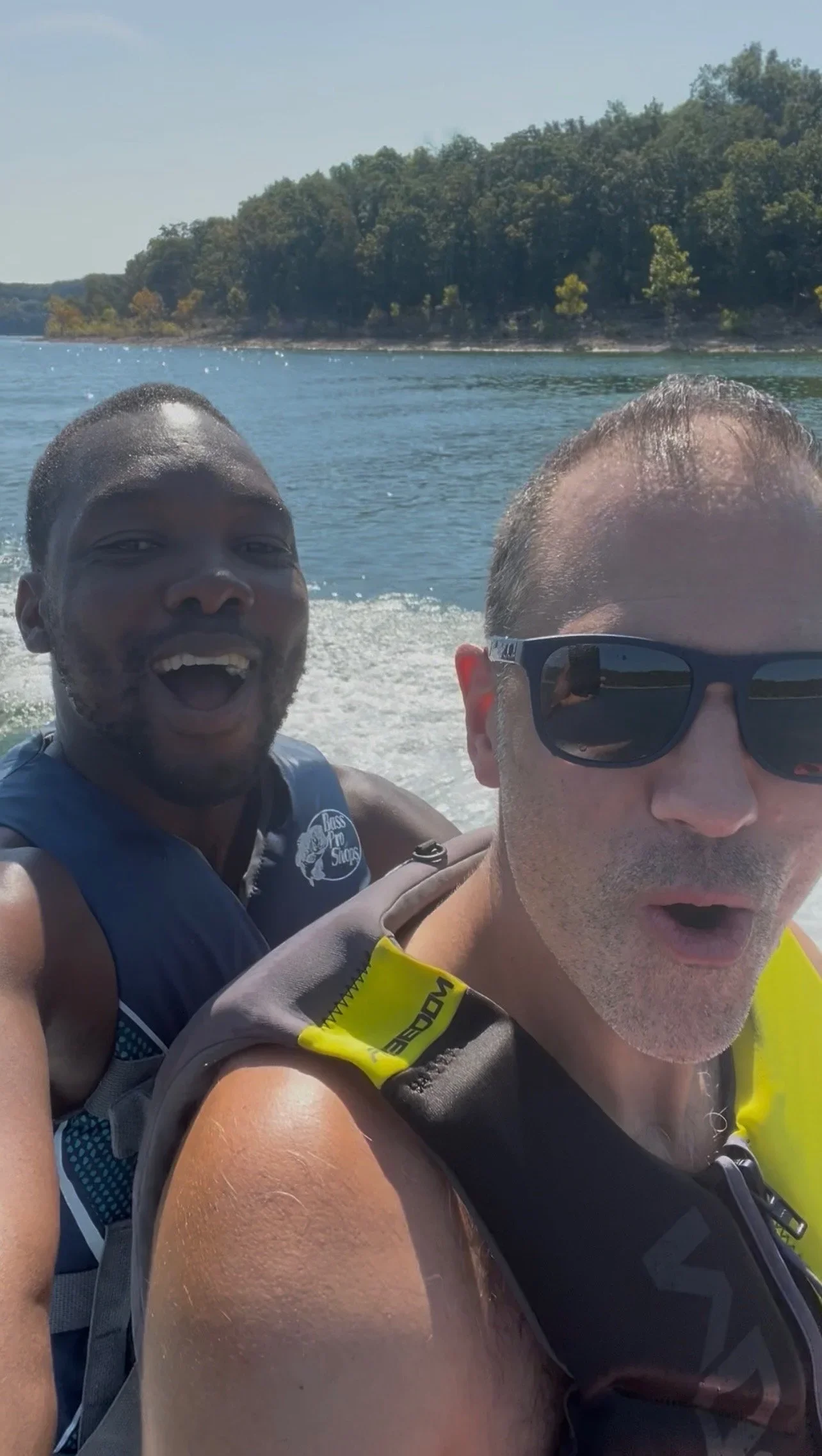
Labor Day weekend has always been a massive lake weekend for my family. This year, we had the incredible opportunity to bring our friends from Togo along with us to Table Rock Lake. Since they had never experienced lake life before, I was determined to give them the full introduction—including a ride on the jet ski.
My buddy, Happy, was understandably nervous. To help ease his fear, I kept the speed low, paid close attention to the water, and meticulously spotted any oncoming waves that might make the ride jarring or scary. Every few moments, I’d yell back, “Hang on!” or “Big wave coming!” We ended up having a blast, though I’m still not entirely sure Happy is lining up for another ride anytime soon.
Later that weekend, I went out for a solo ride. This time, I wanted to really hit some waves and catch some air. Just as I had done with Happy, I scanned the water ahead. I spotted a perfect wave, gunned the throttle, hit it squarely, and got great air.
But what I didn’t see was the even bigger wave hiding directly behind it.
When I landed, I hit that second wave so hard that I completely lost control. I smashed my face into the handlebars, slammed my ribs violently against the jet ski, and flew headfirst into the water. It was such a catastrophic crash that it blew one of my water shoes completely off. A nearby boat rushed over to check on me, their passengers completely shocked that my face wasn't covered in blood.
I didn't see that second wave coming. It completely knocked me off course, caused an immense amount of physical pain, and instantly disrupted my regular routine and rhythm. I had to step back and let my body heal before I could return to the everyday things I take for granted—working out, household chores, and simply being productive.
When Life’s "Second Wave" Hits
As a therapist, sitting on the mend made me reflect on how often this exact scenario happens to us emotionally.
In life, we are often quite good at preparing for the waves we can see. We brace ourselves for the known stressors—a busy season at work, a planned move, or an upcoming transition we’ve had time to anticipate. We throttle up, navigate through it, and feel a sense of accomplishment.
But it’s rarely the first wave that breaks us. It’s the hidden, secondary wave right behind it that catches us completely off guard.
It’s the sudden medical diagnosis right after a career shift. It’s the unexpected relationship rupture just as you thought things were stabilizing. It’s the compounding weight of everyday burnout that quietly accumulates until a minor inconvenience completely knocks you off course, leaving you metaphorically gasping for air and wondering how everything derailed so quickly.
When an unexpected life event hits, the fallout isn't just the initial shock; it’s the painful disruption to your daily routine, your identity, and your rhythm. Suddenly, your capacity to do the things you are used to doing is gone, and you are forced into an uncomfortably slow season of healing.
Rebuilding Your Rhythm in Overland Park
If you have recently experienced a "second wave" in your own life—something you never saw coming that has completely altered your day-to-day life—please know that you do not have to navigate the impact in isolation. It is completely normal for your system to feel overwhelmed, stuck, or out of alignment after a major disruption.
At our practice, we specialize in helping individuals step out of the chaos of unexpected crises and systematically rebuild their internal framework.
Through dedicated [stress management counseling in Johnson County] and specialized support for [complex life transitions in Overland Park], we work together to process the shock, manage the accompanying anxiety, and establish a gentle, sustainable rhythm for your recovery. You don't have to force yourself back into "productive activities" before your system is ready.
Sometimes, the smartest thing you can do after being thrown from the board is to let someone help you pull yourself back up.